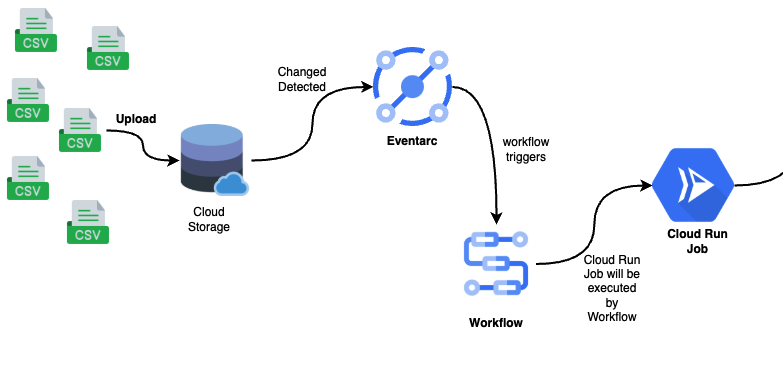
In today’s cloud-driven world, CSV remains a critical format — even for big data. Platforms like AWS, Google Cloud, and Azure provide robust tools for ingesting and processing CSV files at massive scale.
At CSV Loader, we’ve observed how cloud services allow users to upload CSV files into BigQuery, Redshift, or Azure Data Lake. These platforms optimize processing with parallelized loading, automatic schema detection, and support for compressed files, making it possible to analyze millions or even billions of rows efficiently.
Cloud-based CSV handling also enables SQL queries directly on raw files stored in object storage, eliminating the need for full database import. Users can filter, aggregate, and transform CSVs on the fly. This capability makes CSV an ideal interchange format between on-premises systems and cloud analytics tools.
Despite CSV’s simplicity, cloud platforms enhance it with scalability, security, and accessibility. Features like versioning, logging, and permission management ensure CSV files remain manageable, auditable, and compliant with modern standards.
In essence, cloud computing transforms CSV from a local spreadsheet file into a fully integrated data asset. CSV remains simple, but the infrastructure surrounding it allows for modern data analysis at a scale previously unimaginable.
At CSV Loader, we’ve observed how cloud services allow users to upload CSV files into BigQuery, Redshift, or Azure Data Lake. These platforms optimize processing with parallelized loading, automatic schema detection, and support for compressed files, making it possible to analyze millions or even billions of rows efficiently.
Cloud-based CSV handling also enables SQL queries directly on raw files stored in object storage, eliminating the need for full database import. Users can filter, aggregate, and transform CSVs on the fly. This capability makes CSV an ideal interchange format between on-premises systems and cloud analytics tools.
Despite CSV’s simplicity, cloud platforms enhance it with scalability, security, and accessibility. Features like versioning, logging, and permission management ensure CSV files remain manageable, auditable, and compliant with modern standards.
In essence, cloud computing transforms CSV from a local spreadsheet file into a fully integrated data asset. CSV remains simple, but the infrastructure surrounding it allows for modern data analysis at a scale previously unimaginable.